Advancement in Aluminum Casting: Cutting-Edge Techniques for Modern Developers
Aluminum casting, a standard manufacturing procedure, has seen a remarkable improvement in recent times with the introduction of advanced strategies that provide to the needs of modern-day creators. From sophisticated 3D printing methods that press the borders of style to the combination of automation and robotics enhancing production, the landscape of aluminum spreading is evolving rapidly. What really sets these innovations apart are the sustainable light weight aluminum alloys being developed and the high-pressure die casting methods that are transforming the industry. Join us as we discover the leading edge of light weight aluminum casting development, where modern technology meets imagination to redefine what is possible worldwide of steel spreading.
Advanced 3D Printing Strategies
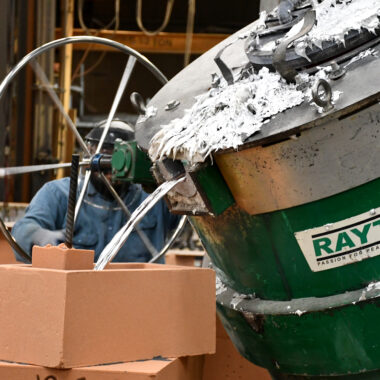
Utilizing advanced additive production procedures, progressed 3D printing methods have changed the manufacturing of elaborate and tailored aluminum components. By employing high-precision printers that can collaborate with aluminum powders or filaments, producers can develop intricate geometries and designs that were formerly unattainable via typical production techniques.
One of the key benefits of advanced 3D printing in light weight aluminum element production is the capacity to achieve light-weight yet long lasting structures. This is especially helpful in industries such as aerospace and automotive, where weight reduction is essential for enhancing gas efficiency and total performance. In addition, the modification alternatives supplied by 3D printing enable the production of unique and tailored parts that fulfill specific demands, resulting in boosted functionality and performance.
Furthermore, the effectiveness of the 3D printing process lessens material waste and lowers the general production time, making it an affordable service for producing light weight aluminum parts. As modern technology proceeds to breakthrough, the capabilities of 3D printing in light weight aluminum production are anticipated to expand, providing also better opportunities for technology in various markets.
Computer-Aided Style Advancements
With the developments in sophisticated 3D printing techniques for light weight aluminum components, the integration of Computer-Aided Style (CAD) software application has actually become increasingly critical in driving technology and effectiveness in the production procedure. CAD advancements have actually revolutionized the means developers and designers create aluminum spreading mold and mildews by offering specific digital modeling capacities. These software application devices enable for the creation of detailed designs and simulations that maximize the spreading procedure, resulting in better elements.
One of the crucial benefits of CAD in light weight aluminum spreading is the capacity to spot prospective problems early in the layout phase, reducing costly mistakes and rework during manufacturing. By imitating the spreading procedure essentially, designers can analyze elements such as cooling rates, material circulation, and structural honesty before a physical mold and mildew is created. This positive strategy not just saves time and sources yet also makes sure that the final light weight aluminum elements fulfill the desired specifications.
Furthermore, CAD software makes it possible for fast iterations and modifications to designs, assisting in fast prototyping and personalization to satisfy details needs. By leveraging CAD developments in aluminum casting, manufacturers can streamline their procedures, enhance product top quality, and remain at the center of development in the sector.
High-Pressure Die Casting Techniques
High-pressure die casting methods are extensively acknowledged for their performance and more helpful hints precision in creating intricate light weight aluminum elements. By using high stress to force molten aluminum right into elaborate molds at rapid speeds, this technique allows for the development of dimensionally exact and in-depth components. One of the vital advantages of high-pressure die casting is its capacity to generate parts with great details and thin walls, making it suitable for applications where lightweight yet solid parts are required.
The process starts with the prep work of the die, which is usually made from solidified device steel and includes 2 fifty percents that create the desired part shape. The molten light weight aluminum is after that infused into the die cavity under high pressure, making certain that the material loads all the elaborate attributes of the mold and mildew. When the aluminum strengthens, the die opens, disclosing the completed component prepared for any needed post-processing.
High-pressure die spreading is frequently utilized in various sectors, including automotive, aerospace, and electronic devices, where high-volume production of intricate light weight aluminum parts is called for. casting aluminum illinois. Its capability to provide limited tolerances, excellent surface finishes, and cost-efficient manufacturing makes it a recommended selection for modern makers aiming to introduce in light weight aluminum casting techniques
Lasting Aluminum Alloys Growth

One strategy to lasting light weight aluminum alloy development entails integrating recycled light weight aluminum content right into the alloy structure. By utilizing recycled light weight aluminum, producers can lower energy consumption and greenhouse gas emissions related to primary light weight aluminum manufacturing. Additionally, recycling aluminum aids draw away waste from landfills, contributing to a more round economic situation.
Moreover, scientists are discovering brand-new alloying elements and processing methods to improve the sustainability of light weight aluminum alloys. By click this link maximizing alloy structures and making procedures, it is possible to improve the recyclability, toughness, and overall ecological performance of aluminum products.
Automation and Robotics Assimilation
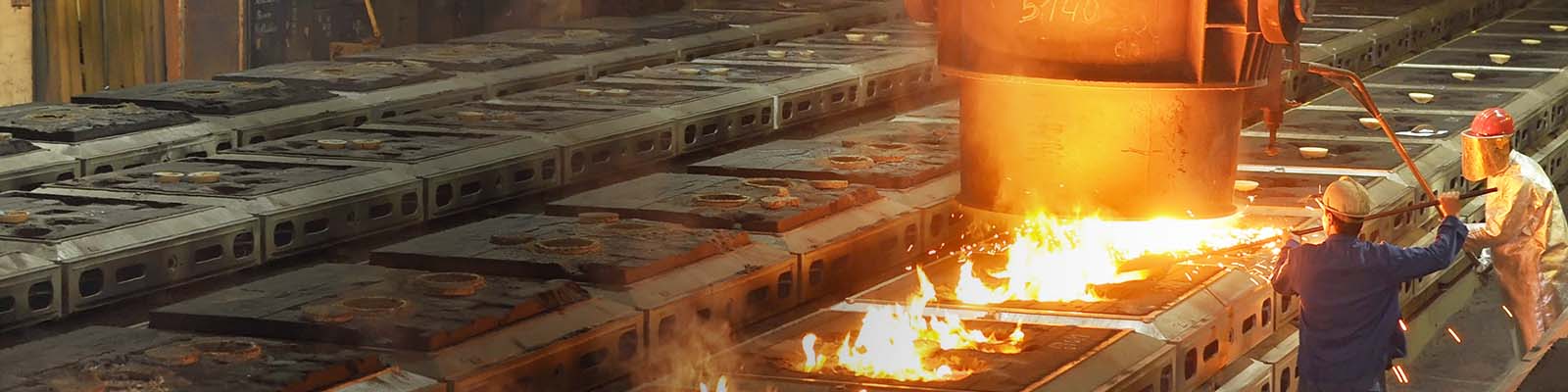
In the world of sustainable aluminum alloys growth, the combination of automation and robotics is reinventing making procedures, leading the way for increased performance and accuracy in manufacturing. Automation and robotics are streamlining standard casting methods, providing many benefits to designers in the aluminum sector. By incorporating automation into the casting process, repeated tasks that were when labor-intensive can currently be effectively handled by robot systems, minimizing the threat of human click to find out more mistake and boosting total productivity.
Automated systems can work all the time, making sure a continual manufacturing cycle that minimizes downtime and optimizes outcome. Robotics combination permits detailed designs and intricate molds to be produced with unparalleled precision, meeting the demands of contemporary creators for premium aluminum components. Additionally, making use of automation in casting procedures advertises a much safer working atmosphere by lessening the exposure of workers to unsafe problems.
Conclusion
To conclude, the advancements in light weight aluminum spreading have revolutionized the production industry. Advanced 3D printing strategies, computer-aided layout technologies, high-pressure die casting techniques, sustainable aluminum alloys advancement, and automation and robotics combination have all added to the innovation of the casting procedure. These sophisticated techniques have allowed creators to produce facility and top quality aluminum products successfully and successfully. The future of light weight aluminum casting is bright with continuous development and technical innovations.
What absolutely establishes these advancements apart are the sustainable light weight aluminum alloys being established and the high-pressure die casting strategies that are reinventing the industry. Join us as we discover the forefront of light weight aluminum casting technology, where technology satisfies imagination to redefine what is feasible in the globe of metal casting.
One approach to lasting light weight aluminum alloy advancement involves including recycled aluminum content right into the alloy structure - casting aluminum illinois. By making use of recycled aluminum, suppliers can decrease power consumption and greenhouse gas discharges associated with main aluminum manufacturing. Advanced 3D printing methods, computer-aided design technologies, high-pressure die casting techniques, lasting aluminum alloys advancement, and automation and robotics assimilation have all contributed to the modernization of the casting procedure